Pioneers of the Scheme
Pioneers of the Mahaweli Development Programme
-imageonline.co-merged-imageonline.co-merged.jpeg) |
| Political Leadership |
Hon. Dudley Senanayake
Hon. C. P. De silva
Hon. Sirima Bandaranaike
Hon. Maithripala Senanayake
C. V. K. Sivagnanam C. C. S.
Engineers
H. De S. Manamperi
R. S. Cooke
K .R. de Silva,
A. Maheswaran
A. J. P. Ponrajah
M. Buddhadasa
Douglas Laddhuwahetty
Munidasa Gunaratne
Sivasubramaniam
K. Satgunasingam
Accelerated Mahaweli Development Programme
Hon. J. R. Jayawardena
Hon. Gamini Dissanayake
N. G. P. Panditharatne
Mahi Wickramaratne
A. N. S. Kulasinghe
Lalit Godamune
Gamini Kanangara
D. Thalagodapitiya
Nanda Abeywickrama
Dr. Wickrema Weerasooriya
-----------------------------------------------------------------------------------------------------------------------------
Extract from Page 30 of Water Resources of Ceylon by Engr. S. Arumugam, 1969
" In the subject of Water Resources Conservation and Utilization, Ceylon is just now in the midst of an epoch making era when a most stupendous project, bigger than any, ever thought of, is being evolved.
The Mahaweli Ganga , our biggest and largest river is to be harnessed , whereby six million acre feet of water is to be conserved to aid the development of nine lakhs acres.The work would cost about Rs. 6,000 million and would spread over a period of twenty years.
The architect of the project is the Minister of Lands, Irrigation and Power,-Mr. C. P. de Silva".
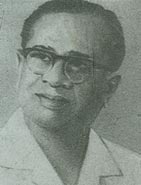
ARCHITECT OF THE MAHAWELI DIVERSION SCHEME – C.P. DE SILVA
“Men of an era are rarely born, but once born they live in the hearts of people long after their demise”
King Mahasen who earned the encomium “Mahasen Deviyo” was a king amongst a long line of kings who did yeomen service to the country. In the early 20th Century, heroes like D S Senanayake earned the title “the Father of the Nation” and C W W Kananagara earned respect as “the Father of free Education”.
But universal suffrage from the 1930’s highlighted Ceylonese had short lived memories and react to impulses and surges without logical thought. The shoddy treatment meted out to public spirited patriots like Anagarika Dharmapala, Sir D.B. Jayatillake, C.W.W. kananagara, E W.Perera, A.E.Gunasinghe and Dr.Ananda Coomaraswamy to name only a few, stands to the eternal discredit of the collective minds of our people. Such ingratitude did not even spare C. P.De Silva - the only known human who earned the encomium “Minneriya deviyo.”
As the youngest Civil Servant absorbed into the prestigious Civil Service in 1935, C.P.De Silva was recognized for his selfless service to the wellbeing of peasantry in Polonnaruwa. He was elected to Parliament in 1952 with just 8 others from the newly formed SLFP and was appointed a Minister and Leader of the House in 1956. He captured the imagination of his people for his selfless sacrifice, display of humanity and empathy in order to raise the living standards of the marginalised farming community living in the inhospitable jungles of the NCP. C.P.De Silva was Sri Lanka’s embodiment of John F. Kennedy’s celebrated statement “ask not what your country can do for you, ask what you can do for your country”.
C.P. De Silva lived through the Malaria epidemic of 1934/1935 before it peaked again in 1967/1968 where 538,000 were affected. Many times, C.P.De Silva was brought to Colombo for treatment only to return soon after recovering from the effects of Malaria
C.P.De Silva passed away on 9th October 1972 at the young age of 60 years, probably due to the long term effects of poisoning which incident took place in cabinet exactly one month before his leader S W R D Bandaranayake was fatally shot in 1959.
C.P.De Silva was a scholar of high repute, but left a potentially comfortable life to dedicate himself to a public service in tireless pursuit of agricultural development to redeem the hapless lives of the down trodden millions of peasantry and emancipate the landless from feudalism.
C.P.De Silva was born to a respected scholarly family from Randombe, Balapitiya. His father C. R. De Silva was a leading Lawyer in the Balapitiya Bar. C.P began his schooling at Dharmasoka College, Ambalangoda.
Educationally promising CP began his secondary school education at the prestigious St Thomas’s College, Mt Lavinia and carried away the coveted Gregory Scholarship and Miller Award for his brilliance in Science and Mathematics in 1927 and progressed to become the Head Prefect in 1930. He then won the “Exhibition Scholarship” to enter the University College, Ceylon and graduated with a B.Sc degree in Mathematics with First Class Honours. His Professor was C Suntharalingam. CP was sent by his father to England to pass out as one of the youngest ever Civil Servants in 1935 at 23 years of age. He returned to his country and was promptly sent to Jaffna Kachcheri as a cadet, to the Puttalam District and Kalutara as AGA and found his destiny in the NCP – first as AGA and then as GA. After about 10 years in the field, in 1946 he was appointed Assistant Land Commissioner and 3 years later as Director, Land Development under the Minister of Agriculture Dudley Senanayake.
The British lacked empathy and the drive to fast track reopening the old irrigation systems, until D.S. Senanayake with his trusted public servant C.P. De Silva arrived on the scene in the 1930s. DS as the Minister of Agriculture in 1935 enacted the Land Development Ordinance in 1935. This law targeted food production to offset the effects of the world war, recover farmlands lost to the wilds and settle people from over populated wet zones to the dry zone and start an agricultural reawakening.
D.S Senanayake commenced the Gal Oya Muliti Purpose Scheme in 1949 by creating the beautiful Senanayake Samudraya encompassing 7 small tanks and comprising about 30 sq miles and settled about 10,000 families. Connected to this wewa was a Power House. Farmer settlements were established in Kalawewa ( 1939 ) and in Hurulu wewa ( 1949 ).
C.P. De Silva lived through the Malaria epidemic of 1934/1935 before it peaked again in 1967/1968 where 538,000 were affected. Many times, C.P.De Silva was brought to Colombo for treatment only to return soon after recovering from the effects of Malaria. There is no politician or public servant who lived over 30 years in such inhospitable surroundings unfazed due to the immense love he had for people.
Over a policy dispute with Dudley Senanayake - his Minister and despite the Prime Minister D.S Senayake intervening, C.P resigned from the Civil Service in 1950 and took to farming in Thabbowa, Putalam. It was here that S.W.R.D Bandaranayake after forming the SLFP in 1952, through intermediaries from Hingurakgoda, persuaded a reluctant C.P to contest Polonnaruwa - the land he loved so much.
C.P.De Silva continued the agricultural renaissance started by DS and continued by Dudley as a politician, by adding value to the restored Minneriya and Parakrama Samudraya, Galoya and Kantale irrigation projects. He was credited with the establishment of Bandiwewa – Kadawlawewa, Galamuna, Buddayaya, Kirimetiya, Ambagaswewa, Meegaswewa, Diyasenapura, BisoBandara, Bebiyawewa, Jayanthipura in Polonnaruwa District. He commissioned the Uda Walawe project in 1967 with a reservoir extending to about 8400 acres of water at full capacity with two power plants up to 5.4 MW in the borders of the Ratnapura and Monaragal Districts with ADB aid. The Hurulu wewa was restored in 1958. He created the Rajanganaya settlement – both in Anuradhapura District, to name a few in NCP.
C.P.De Silva constructed the Chandrika Wewa by damming Hulanda oya, a tributary of the Walawe ganga near Embilipitiya in the Ratnapura District in 1963. The water extent of this reservoir was 1100 acres. There is an untold story how this wewa was named.
SWRD and CP were known to share a common interest in reading horoscopes. Once SWRD turned up where CP was living with his brother in law R.T. De Silva at Dharmapala Mawatha and after lengthy comparison of views concluded that, his young daughter Chandrika will one day be the Head of State. C.P.did not fail to remember his assassinated leader in 1963 by naming the newly constructed reservoir ‘Chandrika Wewa’ after Chandrika, who would have been a teenager in 1963. She became the President in 1994.
He introduced the amendment to the Irrigation Act in 1968 and established the River Valleys Development Board ( RVDB ) in 1969. The RVDB facilitated the sugar cane industries in Galoya and Kanthale and later in Pelawatte and Sevenagala.
C.P.De Silva had such foresight that his contribution to education by the establishment of the Polonnaruwa Royal Central College and Medirigiriya Central College in 100 acre blocks of land each with hostel facilities for boys and girls and staff quarters and a fully fledged play ground at Royal Central, must be seen to believe. Even a new Town in Polonnaruwa was started in Polonnaruwa.
As a national minded politician, he championed Human rights by spearheading the movement to defeat the Press take over Bill in Parliament on 3rd December 1964. One of the least talked of legislative enactments C P De Silva spearheaded was the Nindagam Bill in Parliament on 25th February 1968. The abolition of Nindagam was designed to free tenant farmers from compulsory services lands owned by Feudal Landlords, throughout the country. Releasing Nindagam lands to the tenant cultivators and freeing them from encumbrances or settling the peasantry in these lands, resulted in the poor being absolved of social stigma and generated enthusiasm for the proper utilization of paddy fields and highlands.
The last of C P De Silva’s massive multipurpose development projects, was the presentation of the Mahaveli Development Authority Act in February 1970. With it commenced Sri Lanka’s largest ever multipurpose development scheme, initiated by C.P.De Silva. Being a Mathematics Honours graduate, he carefully and meticulously planned to divert the longest river The Mahaweli (206 mls / 331 km long) to the NCP where an advanced civilisation over 2000 years ago had lived and abandoned it to move to the wetter parts of the island. He contracted with the US Operations Mission (USOM) to undertake a feasibility study of the planned Mahaweli development scheme and The Canadian Hunting Survey Corporation to conduct a separate independent survey of the water body of the Mahaweli river and when in Parliament in 1962 The Leader of the Opposition Dudley Senanayake suggested that an overall study of the entire Mahaweli development scheme encompassing land and water resources of the entire Mahaweli river basin which included Victoria and Randenigala, that too was accepted by CP and The UNDP was contracted to undertake an overall independent study in 1963.
The UNDP “Master Plan” was approved by Parliament in 1968. By then, CP De Silva had resigned from the SLFP and held the same portfolio under the Dudley Senanayake government. In planning, the Minister who had a practical overview of the entire landscape for long years unlike any other, gave his inputs to his officials how and where to demarcate areas for human settlements, schools, hospitals, townships and about deforestation and reforestation and the preservation of Elephant corridors. The Mahaweli diversion clearly targeted all races and was never intended or designed for short term political advantages.
The proposal phased out the development over a period of 30 years step by step, taking into consideration financial resources available to the government and the protection of the fauna and flora in development areas. The Mahaweli would facilitate the development of 364,372 hectares of land out of which 253,968 hectares of new land would receive water for cultivation and 110,404 hectares would receive water for both seasons per annum unlike in the past.
The Prime Minister Dudley Senanayake with C.P.De Silva laid the foundation stone for the diversion at Polgolla on 28th February 1970 - a mere 2 years after Parliament approved the UNDP proposal. But just 3 months later on 27th May 1970, Mrs Bandaranaike was swept to power with a 2/3rd majority and C.P.De Silva lost his seat to a Communist Party (Peking wing) first timer to the area Ratna Deshapriya Senanayake by 2548 votes. The result shocked the whole country. One year later, the conservative farming electorate of Minneriya, became a JVP hot spot in 1971 in the clutches of a few politically misguided youth.
It took 6 long years for Mrs. Bandaranaike’s government to inaugurate the tunnel for the intake of water into the intake tunnel at Polgolla on 8th January 1976 for which the foundation stone was laid on 28th February 1970.
It is ironical that a few months after the initial diversion was completed by Mrs Bandaranaike’s SLFP government, her government was badly defeated on 21st July 1977 and reduced to 8 seats (29.7%) with the UNP gaining a 5/6th Majority (140 seats/50.9%) in a parliament consisting of 168 members. By then, C.P.De Silva was no more. If not, he would surely have completed the Mahaweli project he conceived, as a 65 year old young politician.
Dr Wijedasa Rajapakse wrote in his book on C.P.De Silva “There are many parties that claim credit for the said project launched by C.P.De Silva. Those who were trying to grab the credit for the project hadn’t the elementary courtesy to mention the name of C.P.De Silva. They were so ungrateful as not to mention the name of the architect of the project C.P.De Silva. In addition to it, people are reluctant to even mention his name even in passing. Our people are ungrateful and hypocritical so much so that they do not appreciate if not for the vision and mission of C.P.De Silva, our country would not be self-sufficient in rice and in many other crops. The same is true to a great extent with regard to Hydro Electricity as well.”
A politician who wanted to live a free man in a free society | |
| Tribute to C.P. De Silva | |
| By Dr. Karunasena Kodituwaku | |
C.P. De Silva, the Minister of Lands, Land Development, Irrigation and Power from 1956 to 1970 except for a few months in 1959 and 1960, devoted his life to the North Central Province. Thirty eight years after his demise he is still referred to as “Minneriya Deviyo” (The Angel of Minneriya). Charles Pervical De Silva, fondly known as CP to his friends and colleagues, passed away after a brief illness on October 9, 1972. He was one of those rare politicians who represented the large and difficult Polonnaruwa District, at that time the Polonnaruwa electorate, for 13 unbroken years from 1952 and subsequently the Minneriya electorate from 1965 for the next five years. He was the only hope to the poor farmers of the entire Polonnaruwa District for 18 long years, until he too was caught in the UNP debacle in 1970 and lost by 1000 votes.
The election result released early that night, not only shocked the people of the Polonnaruwa District but the whole country. All knew if CP had lost, the UNP Government would lose too. It was only a few months before that the Prime Minister Dudley Senanayake laid the foundation stone for the Polgolla Diversion commencing the biggest single multi purpose project ever – the Mahaweli irrigation project, for which CP had dedicated his entire Civil Service from 1935 to 1952 and his political career from 1952 to 1970. He was born on April 12, 1912 at Randombe, Balapitiya. His father C.R. De Silva was a well known Attorney-at-Law practising at the Balapitiya Bar. He began schooling at Dharmasoka College, Ambalangoda and soon moved to S. Thomas’ College Mount Lavinia. He was a brilliant student at S. Thomas’ and became the Head Prefect, winning the prestigious Gregory Scholarship and the Miller Award for brilliance in Maths and Science. He then won the ‘Exhibition Scholarship’ to enter the University and graduated with B.Sc Special Maths Honours (First Class). His professor at the University was Mr. C. Sunethralingam. His parents, who by then were educating the other academically promising members of the family who later became the well known child specialist Dr Stella De Silva, research scientist, Dr L.B. De Silva, a fine civil lawyer A.H. De Silva (MP for Polonnaruwa) and that fine Ceylon boxer Merril De Silva (MP for Minneriya), had no hesitation in sending CP to England to pass out as a civil servant, the most prestigious position to be in under the British administration. In 1935 CP returned to Ceylon and entered the civil service, as one of the youngest civil servants to ever pass out in the history of civil service in Ceylon. He was promptly sent to Jaffna and then to Puttalam as a Cadet. He then served as an AGA for seven long years in the Districts of Anuradhapura and Polonnaruwa. As a young and enthusiastic Civil Servant, CP chose to live in the small human settlements surrounded by thick jungle under very difficult living conditions. CP lived alone in the Rest House overlooking the Giritale tank and travelled in a canvas top Willys Jeep once a week all the way to Matale via Elahera to buy milk, eggs, fish and meat to fill his kerosene fridge and other provisions to last the week. Prior to being transferred as AGA Anuradhapura, C.P. De Silva served as an Assistant Secretary of the Ministry of Agriculture under Prime Minister D.S. Senanayake. In 1946, he served as the Assistant Land Commissioner. In 1949, he was elevated to the position of Director, Land Development under Dudley Senanayake who was the Minister of Agriculture. Thus he served the poor farmers under the direction of both D.S. and Dudley Senanayake and is known to have personally overseen the farmer settlements in the entire Rajarata and in particular in the Minneriya colonization scheme. The Minneriya Colonization scheme was in crisis as it was becoming increasingly difficult to persuade the colonists to stay on. D.S. Senanayake called for his young Assistant Secretary and had given him the task of proceeding to the NCP as Assistant Government Agent to resurrect the dying scheme. CP never forgot the support D.S and C.L. Wickremasinghe, the then Land Commissioner gave him in reviving the Minneriya Colonisation scheme. It is said that his Minister and the Land Commissioner used to accommodate CP for hours in the Ministry in Colombo discussing the Minneriya scheme and the several issues faced by the farmers. It is also said that at every such meeting, D.S. and C.P. finished the Gold Flake cigarette case pulled out by DS and the tin of Gold Flake brought by CP before retiring for lunch. CP was so closely associated with his Minister and the Land Commissioner that the GA Mr. Richard Aluvihare (later Sir Richard) was quite intrigued with the knowledge CP had of issues connected with land and land settlements and Government thinking on them. So much that the G.A. knew all CP’s requests on behalf of the farmers were met by the Government led by D.S. and Minister Dudley Senanayake. It was no surprise when the proud D.S. Senanayake paid a glowing tribute to the AGA, NCP in the then State Council when the Minneriya Colonisation scheme was revived and became a great success. Very soon CP was made the Additional Land Commissioner in charge of land development. That was in 1946. The Soulbury Commission also arrived in Ceylon and among the many places visited by the Commission was Minneriya. In fact Lord Soulbury attended a Minneriya Cooperative Society AGM. He was so impressed by the way the meeting was conducted, that he had said, “if in the backwoods of Ceylon the people could conduct a meeting of this nature in such a democratic manner, who could say the people are not fit for self Government.” On February 4, 1950, he resigned his office and retired to his farm in Puttalam much to the annoyance of his father. One evening, while he was watching paddy being stacked in his farm, CP had a visitor, the late S.W.R. D. Bandaranaike. S.W.R.D’s mission was to persuade CP to enter politics. He succeeded in persuading CP not only to contest from Polonnaruwa but also give leadership to his community in Balapitiya. CP was one amongst a few in the SLFP that managed to win in the 1952 general election. When C.P. De Silva, as the Minister of Lands, Irrigation and Power presented the Bill in Parliament, in 1970, to establish the Mahaweli Development Board, he stated, “during that seven year period I lived and worked in the Rajarata, I saw while standing helplessly on the Manampitiya bridge just 6 miles away from Polonnaruwa, how the poor suffered when the Mahaweli overflowed its banks during the monsoons and suffer again without water to irrigate, drink or bathe during the Yala seasons. I dreamt for hours how to plan the diversion of the Mahaweli waters coming down the awesome Mahaweli river from the wet zone hills to the dry zone.” It was this dream that resulted in the planning of the great Mahaweli Scheme by C.P. De Silva to be completed in 30 years in 3 phases commencing 1970. The Mahaweli Diversion scheme was readily supported by UN funding agencies and the UNP government led by Dudley Senanayake who had empathy towards agriculture. But CP was quick to caution the Government that, “the total estimated expenditure on the Mahaweli scheme at the time 1969/70 was three times the national income of 1968 and therefore all the agencies dealing with this gigantic project must be extremely careful about the expenditure associated with the project.” It was unfortunate that after CP lost in 1970, not much progress was made by the government led by Sirimavo Bandaranaike from 1970 to 1977 until J.R. Jayawardane commissioned his young UNP Minister Gamini Dissanayake to accelerate the Mahaweli diversion scheme, which he did with great efficiency. Out of the 18 years in parliament, late C.P. De Silva was a Minister and Leader of the House for 14 continuous years, except for a couple of months each when he was removed from the Cabinet by W. Dahanayake and when he resigned from the cabinet of Mrs. Bandaranaike. It is also significant that CP held the same portfolio in both the SLFP and UNP governments and retained the post of Leader of the House in all three governments while being a Minister. Interestingly, on the 25th of August 1959, CP drank the glass of milk meant for S.W.R.D. Bandaranaike at cabinet and collapsed seriously ill. No inquiry was held into this incident. Exactly one month later, the Prime Minister was shot. The PM died on the 26th September 1959. Since CP was undergoing treatment in London, he could not take office as the Prime Minister. But a month later, he returned to lead the SLFP in the 1960 March elections though not fully recovered. UNP got 50 seats and the SLFP 46 seats. The entire opposition backed the SLFP led by CP to form the Government without going for another election at a difficult time, if the UNP did not have a working majority. When the UNP lost the Throne Speech as predicted, the Governor General decided to hold another election in July 1960. At that stage, CP took the unprecedented step for a politician to hand over the leadership of the SLFP to a reluctant widow Sirimavo Bandaranaike. SLFP romped home as winners but Mrs Bandaranaike refused to contest a seat. She was appointed to the Senate. Again, CP was called upon to lead the SLFP in Parliament and was the automatic choice as the Leader of the House. In this context, the observation made by Attorney-at-Law S.L. Gunasekera, a forthright speaker, at a seminar to commemorate the 31st death anniversary of LSSP leader Dr. N.M. Perera in August 2010, is worth being quoted from the Sunday Leader of August 22, 2010. He spoke on the topic ‘Constitutional requirements for a united Sri Lanka’ and he is quoted to have told the audience, “the reason why Mrs. Bandaranaike became the world’s first woman Prime Minister was because the rightful leadership of the SLFP which at the time should have been given to C.P. De Silva, was denied to him, simply because he was from the Salagama caste.” In fact, the political history of our country would have been different if CP became the Prime Minister in a SLFP government on one of two occasions – after the death of S.W.R.D. Bandaranaike or if he accepted the offer of Dudley Senanayake. CP shunned cheap popularity and was hardly seen photographed with other Ministers at important and not so important events. Instead, he concentrated more on his pet subject, the Mahaweli project, and restoration of large and minor irrigation tanks in the Anuradhapura, Ampara, Galoya, Moneragala, Wanni and Baticoloa Districts. Not only did he develop lands and irrigation systems but he is credited with the establishment of the Royal Central College, Polonnaruwa (modelled on the lines of Royal College, Colombo in infrastructure) and the Medirigiriya Central College – both schools with hostel facilities for male and female students and staff quarters, large playgrounds, labs etc. It was C.P. De Silva who developed Mahanama College, Colombo by acquiring land for the school from the Walukaramaya temple close by. The break point with the SLFP emerged when Mrs. Bandaranaike and the old left with other agendas, began tinkering with the freedom of the Press to survive mounting deficiencies in governance. C.P. De Silva worked according to his conscience. He fought hard against the Lake House Press take over Bill and when the government decided to present it to Parliament against his wishes; he decided to cross over to the opposition. It was a very difficult decision he had to take and it is said he had sleepless nights pondering over what to do. Finally, C.P. De. Silva left not only his powerful Ministries and perks of office but also the Deputy leadership of the SLFP of which he was also a founder member. Eventually CP joined the UNP. CP’s colleagues in Parliament never thought he would quit the SLFP, although he spoke about the freedom of the press. On that fateful day of December 3, 1964, history was created. CP crossed the floor of the House in dramatic fashion and made an emotional speech on behalf of a free and unfettered Press (there was no television then). He said famously, “I am foregoing all this today in order to live a free man in a free society.” (The writer is Secretary of the Senanayake Foundation) |
N G P Panditharatne-a personification of honour and integrity « LANKA Standard
N G P Panditharatne-a personification of honour and integrity
“A man has honor if he holds himself to an ideal of conduct though it is inconvenient, unprofitable, or dangerous to do so.”- Walter Lippman
During the last fifty years, our public service has been blessed with extraordinarily talented men and women, be in the field of law, medicine, politics, engineering or
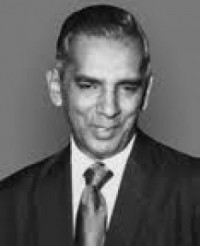
N.G.P.Panditharatne
general administration. Some have shown almost super-human qualities in problem-solving; some have displayed superlative ability in man-management, some have produced unbelievably creative programs for human development, yet fewer men have been seen in public service, who in the words of Walter Lippman, “ held themselves to an ideal conduct though it was inconvenient, unprofitable and dangerous to do so”. N G P Panditharatne was one of that rare species.
Fondly referred to as Pandiths
Whether it was as Director-General of Mahaweli Authority of Sri Lanka or Chairman of the United National Party, Pandiths, as he was mostly fondly referred to by many of his friends, showed remarkable stature as a very dignified, principled and honorable human being. Mr. Panditharatne assumed office as the first Director-General of Mahaweli Authority of Sri Lanka when it was established by the then-UNP government in 1979. At that time, Gamini Dissanayake was the Minister of Irrigation, Power and Highways and when President J R Jayewardene took the most momentous decision to accelerate the development of the Mahaweli River Basin settlement scheme, President Jayewardene chose Pandiths as its administrative head. What was envisaged to be completed in thirty years was telescoped into six years. President had the youthful Gamini Dissanayake as the Minister of a portfolio which was once held by D S Senanayake, Dudley Senanayake and J R himself. To steer the smooth operation of the new scheme none was more qualified than N G P Panditharatne.
Acknowledged leader of the business community
A chartered accountant by profession and as senior partner of the famed Ford Rhodes & Thornton, Mr. Panditharatne was an acknowledged leader of the business community in Sri Lanka. My association with Mr. Panditharatne began with his assuming of duties in the Authority as DG. As private secretary to the Minister of Mahaweli, I used to meet Pandiths almost on a daily basis. Many a time it was on a new scheme that he introduced into the settlement area on public relations and educational enhancement which was geared towards the upliftment of the settler children. In all, fifty three public relations officers were recruited and they were placed in systems H, C, B, G, Uda Walawe and Weli Oya. A manager was appointed to overlook the systematic operation of the various programs and even a well-known Buddhist monk was assigned to inaugurate “Daham Pasalas” in newly-developed settler systems. The word “colonist” was obliterated from the lingo and replaced by a more dignified term “settler”. And among an overachieving bunch of government servants, Mr. Panditharatne stood out as a tall professor lecturing to and directing his brilliant students with patience and finesse.
Values
One learnt many values from Pandiths. His patience to listen to a dissatisfied employee, his loving care for a bereaved settler, his punctuality and sartorial elegance which he showed at all times and at functions are but a few of this man’s great qualities that made him a role-model to all under his command. People were awed by this soft-spoken giant.
Led by Example
I was with him at the time of his departure from the office of Director-General of Mahaweli Authority. It was indeed a very moving scene. After a relationship that lasted for almost four decades with his boss, JRJ, Mr. Panditharatne fell into the bad books of the President over the settlement of Sinhalese Buddhists on the right banks of the Mahaweli Ganga in System “B” along the Eastern border at Welikanda. JRJ did not fire him, Mr. Panditharatne resigned. He gave instructions to his domestic staff to disconnect the official telephone lines and asked the driver to return the official car forthwith. He never used the official car other than for official purposes. He led by example where others faltered time and time again.
Gamini Dissanayake’s dream team
They say Gamini Dissanayake had one of the best ever teams of officials around him. He was blessed with the calibre of officials that any government would long to have in its fold. The creative genius of Dr. Wickrama Weerasuria, the sharp knowledge of Secretary Sivagnanam, a human dynamo in Mahi Wickramaratne, never the-procrastinator Dougie Ladduwahetti, taskmaster A N S Kulasinghe, loyal perfectionist Lalit Godamune, brilliant executives, Dakshitha Thalgodapitiya and Gamini Kannangara and master-drafter of cabinet papers, Nanda Abeywickrama were among those who had the privilege to serve Gamini Dissanayake. But the dignity and honor that Pandiths possessed overshadowed all the brilliance and skills of the others.
It was indeed a privilege to have known Mr. Panditharatne and even a greater honor and privilege to have occupied the same seat that he once sanctified as Director General of Mahaweli Authority. Of all the qualities that he instilled in me I value honour and integrity the most, for such traits are in short supply in today’s administrators.
Sir, you not only led us, you showed the way too.
May you attain Nibbana!
--------------------------------------------------------------------------------------------------------------
Daily Mirror - Sri Lanka Latest Breaking News and Headlines - Print Edition The visionary engineer who lifted a nation with innovations
The visionary engineer who lifted a nation with innovations
27 October, 2025
 Dr. Kulasinghe was a pioneer who sought new paths to solve problems others deemed unthinkable
He demonstrated that foreign contractors were not essential for national infrastructure
His crowning achievement was leading the Accelerated Mahaweli Development Project from 1977
By Sugath Priya Kulathunga Arachchi
The picture shows Dr. A.N.S.Kulasinghe delivering a Technical presentation at the Sri Lanka Branch of The Institute of Marine Engineers on October 18, 2000 |
Among his architectural marvels are the Colombo Planetarium, designed like a blooming lotus and seating 500 people |
The Philatelic Bureau of the Department of Posts issued a new postage stamp in the denomination of Rs.10.00 26th October, 2016 to commemorate Dr. A. N. S. Kulasinghe |
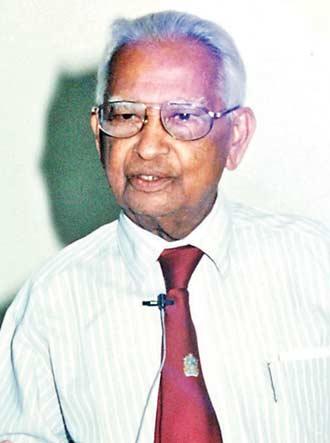
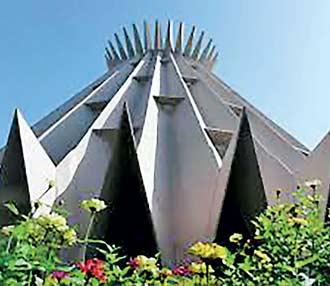
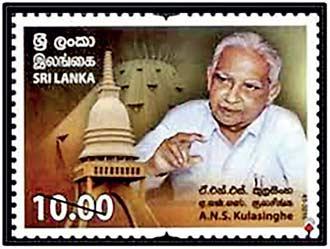
Sri Lanka once had a remarkable inventor who proved that poverty could be overcome not through borrowed development models, but by harnessing indigenous knowledge and innovation. That man was the late Dr. Arumadura Nandasena Silva Kulasinghe—a globally acclaimed Sri Lankan engineer whose extraordinary creations continue to inspire the world.
Dr. Kulasinghe was a pioneer who sought new paths to solve problems others deemed unthinkable. He was celebrated not only for his contributions to engineering research and development, but also for applying locally grounded solutions to national development. His guiding principle was simple yet profound: “We must develop construction policies that use our own resources, suit our climate, minimize costs, and do no harm to the environment.”
He demonstrated that foreign contractors were not essential for national infrastructure. His work earned admiration from global figures, including Sir Arthur C. Clarke, who once said that post-independence Sri Lanka produced only a handful of brilliant scientists—and Kulasinghe stood out among them.
Global recognition, local genius
Kulasinghe’s engineering brilliance earned him advisory roles in Malaysia, Indonesia, Singapore, the Philippines, and Thailand. His name became synonymous with innovations like precast concrete technology, concrete boats, silos, and window frames. The iconic Colombo Planetarium and the monumental works of the Accelerated Mahaweli Development Project are testaments to his genius.
Born in 1919 in Udammita, Ja-Ela, Kulasinghe was educated at Wadduwa English Boys’ College, Maris Stella College, and St. Benedict’s College. He studied engineering at Ceylon Technical College under the University of London and won the prestigious Sri Chandrasekera Scholarship.
His patented precast concrete technology earned him the nickname “Concrete Kulasinghe.” He also invented the FS 77 Fuel Saver, which reduced fuel consumption by over 25% and was successfully tested in the UK and Scotland. He developed efficient tea leaf dryers and small generators.
Despite his global acclaim, Sri Lanka often failed to fully utilise his talents. A famous anecdote recounts how a Sri Lankan minister sought low-cost housing advice in Malaysia, only to be told that Malaysia had learned from Sri Lanka—specifically from Kulasinghe.
In the 1960s, Prime Minister R. Premadasa challenged him to build housing on a marsh in Maligawatte. Kulasinghe accepted and successfully constructed four-story flats there, followed by similar projects in Narahenpita.
His crowning achievement was leading the Accelerated Mahaweli Development Project from 1977, completing a 30-year plan in just five years. He oversaw the construction of major reservoirs including Victoria, Kotmale, Maduru Oya, Randenigala and Rantambe.
He championed cost-effective technologies like concrete roads, concrete sleepers for railways, and ferrocement boats. His innovations saved up to 25% in railway costs and empowered local engineers.
Kulasinghe often clashed with foreign consultants, notably during the Maduru Oya project, where foreign intervention quadrupled costs and eliminated a planned 6MW power station from the local design.
Architectural wonders
Among his architectural marvels are the Colombo Planetarium, designed like a blooming lotus and seating 500 people, and the Kalutara Chaitya—Sri Lanka’s largest hollow stupa. Despite opposition, he built it with a hollow interior to prevent collapse near the river mouth.
He also designed the Sambodhi Chaitya at the Colombo Port and the Mahaweli Maha Seya near the Kotmale Reservoir, commemorating submerged temples. The latter is Sri Lanka’s second tallest stupa after Ruwanweliseya.
His legacy includes restoring the Maligavila Buddha statue, building the Puttalam Cement Factory, and leading projects for the State Engineering Corporation, National Science Foundation, Lanka Leyland, and Lanka Steel Corporation.
A Lasting Tribute
Dr. Kulasinghe passed away on February 14, 2006, at age 86. In honour of his service to the Mahaweli Project, the recently built Moragahakanda Reservoir was named the “Kulasinghe Reservoir.”
He thought out of the box and always saw the bigger picture
Douglas Ladduwahetty
An inescapable feature of my public service career starting in 1960 was interacting regularly with technocrats – in survey, forestry, irrigation, land settlement, agriculture - both at district and later at national level. Of them Douglas Laduwahetty impressed me as one of the few engineers who could ‘think out of the box’ and also ‘think laterally’ in looking for solutions to development related problems as they unfolded.
In those days of ‘closed departments’, loyalty to the agency one served in, was uppermost in the minds especially of technically trained staff. DL often went beyond engineering and never hesitated to speak his mind even if he broke the ‘departmental code’ for he had the ability to look at the bigger picture and the wider issues; both I believe, intuitively as well as perhaps through wider reading.
In the mid-70’s, we used to meet across tables and exchange views in resolving mostly day-to-day mutual problems in the fields we were involved in. DL had the personal charm and skill to meet non-engineers at equal level and get their assistance departing from established protocol and worrisome rules. As Resident Project Manager of Mahaweli System H, he was reputed to have not only breached departmental barriers but also mentored his young engineers to look beyond the discipline they were trained in and to learn to interact effectively with other officials and the farming community who were mostly ‘settlers’ in a new environment.
By the time I renewed contact with DL in the late 70’s the high level government decision for the Accelerated Mahaweli Programme (AMP) in which DL was the proponent and the driving force had already been made. This was about the time when DL introduced me to Minister Gamini Dissanayake in his makeshift office on Darley Road.
As a member of the small ‘AMP Task Force’ headed by N.G.P. Panditharatne, that reported directly to President JR fortnightly, I observed that DL was perhaps the only member who was always optimistic about the AMP and never ever uttered a negative response whenever a doubt was raised. Invariably he came up with an alternative solution. That reflected his resolve and determination to go through what he had pledged to the Head of State which later made President J.R. Jayewardene to announce “we have made a decision to accelerate the Mahaweli Programme…. And we will see it through” which gave all stakeholders the confidence to commit themselves. DL never ‘took his foot off the accelerator’ so to say.
In this connection, I recall the ‘Travelling Seminar’ we had in early 1978 where ten of us specialized in seemingly conflicting and adversarial fields, drawn from both the public and the private sector, led by NGP toured the yet unexplored AMP area – from the future Victoria Dam site through future Ulhitiya, Systems C, B and A to the East Coast exchanging views on the AMP strategy. At the end of three enjoyable days, many conflicting viewpoints had been discussed and we had some consensus on the road map. This was the beginning of an AMP management style which flourished throughout the next decade and more.
In the early stages, the AMP had many detractors. DL in no small measure reached out to them and the media and assisted the political leadership to convince the non-believers and opponents on the potential benefits of the AMP. The highlight of this exercise was when DL was instrumental in arranging for President JR and Minister GD to meet face to face, live in the field, with political stalwarts “NM” and “Colvin” to address their genuine concerns and resolve them on the spot.
After 10 years together in the ‘Mahaweli Team’ we went our own ways when I joined then IIMI (now IWMI). In the mid-90’s a heterogeneous set of retired Mahaweli aficionados re-grouped to ‘re-live the Mahaweli spirit’. Following intensive brain-storming, the result was the birth of I/D/E/A/S, a non-profit private company committed to foster community led development and micro and small scale enterprises through the medium of seed capital and concessionary financing. After 25 years it is flourishing. DL took great pains that it adhere to its original principles.
In a recent TV talk show, a business leader while referring to the need to expand IT to its full potential quipped: “for us to meet our goals, we must make it a ‘Mahaweli Project’”which goes to show that ‘Mahaweli’ has acquired a brand name status.
DL clearly was one who relentlessly worked towards it; these memories will certainly live with our colleagues for a long time.
Nanda Abeywickrama
https://archives1.dailynews.lk/2021/09/06/local/258544/death-senior-irrigation-engineer-douglas-ladduwahetty
Monday, September 6, 2021

The death occurred on Saturday of retired senior irrigation engineer Douglas Pathmananda Ladduwahetty (96). He was the leading engineering mastermind behind the Accelerated Mahaweli Development Scheme and several other major engineering and irrigation projects in the country. In a career that began in 1953 and spanned over 50 years, he oversaw practically all the irrigation development projects in the country from Gal Oya to Udawalawe. His contribution to the country’s irrigation sector has been appreciated by Presidents J.R. Jayewardene and Ranasinghe Premadasa and Prime Ministers Dudley Senanayake and Sirimavo Bandaranaike.
He was also a former Chairman of the River Valleys Development Board, Mahaweli Development Board and the first civilian Chairman of Airport and Aviation Services Limited. An old boy of Richmond College, Galle, he was also an academic who contributed papers to industry journals and represented Sri Lanka at many forums overseas. He was a regular contributor to the opinion pages of this newspaper on irrigation, science and agriculture.
He was the father of senior journalist Ravi Ladduwahetty, a former Business Editor of the Daily News, and three other children. His wife Sita predeceased him. A private funeral was held yesterday in accordance with the prevailing health guidelines.
slandE
Douglas Ladduwahetty
In Sept 2021, Douglas Ladduwahetty, a charismatic member of the Sri Lankan Engineering fraternity, took leave of us. He led a full life, dedicated to the engineering profession for more than five decades. His participation in the development of irrigation systems in the country made drastic improvements to the lives of many thousands of peasant families in Sri Lanka. With his departure, Sri Lanka certainly has lost a great son of the country who made an enormous contribution to the irrigation sector, in particular, the Mahaweli Development Program.
In 1977, when a new government was elected to power, the country was facing significant issues including 20% unemployment, severe shortage of housing, lack of agriculture facilities and a high demand for electricity to name a few. The new PM JRJ had studied the on-going Mahaweli Development Program (MDP) which was scheduled to be completed in 30 years. The PM wanted to expedite the progress of this massive project, as a means to provide much needed redress to the people.
With this background, JRJ had sent a message for Mr Ladduwahetty, with whom he had had contacts before, and sought his opinion on how soon the MDP could be completed. Mr Ladduwahetty, it is said, had simply replied that it could be even done in six years provided necessary funds are made available. This had spurred the PM to summon a special Cabinet meeting with all the Irrigation sector Engineers and technocrats and took a daring decision to accelerate the Mahaweli Project as the most prestigious program of his government. This changed the entire landscape of the country. And the rest is history.
Mahaweli Authority was formed to implement the MDP and CECB was assigned with large-dams construction works. Mr Ladduwahetty was made the Chairman of Mahaweli Development Board (MDB) to implement the downstream development works in Systems H, C and B. I was privileged to commence my career in engineering under his tutelage. It commenced in 1976 in the jungles of the North Central province where I had my first posting as Project Engineer with MDB in Kalawewa. Mr. Ladduwahetty was the Resident Project Manager for the Kalawewa under MDP.
As young graduates, we were inspired by his leadership. He had his own methodology in managing people and work. He never wanted to get trapped into highly bureaucratic rules and regulations that prevailed during the day and wanted to expedite progress of work at sites. During those days, malaria was rampant, and this region was infested by elephants. We were accommodated in temporary housing and hardwater in the area available for drinking and bathing was not something we were used to.
With meagre facilities available, a good number of engineers and supporting staff left MDB to join other departments and corporations, as they preferred to work in cities. But Mr Ladduwahetty who had vast experience in working in rural areas such as Gal Oya and Walawe Projects before, gathered all of us around and encouraged us to remain and develop the areas taking the task as a challenge. He shared his many years of experience working in such conditions.
To encourage us, he had frequent meetings with all officers and advised us the importance of dedicating our time to develop the rural sector and in the process help the poor farmers who were struggling to survive. Douglas Ladduwahetty held many critically important positions in Public Service, where his knowledge, energy and enthusiasm assisted in policy making and implementation that made a difference to many in our society.
After his Mahaweli assignment he worked as a Consultant Engineer, and many approached him to seek his advice on construction and management aspects. Later on, he was appointed as the Chairman of the Airport and Aviation Services Ltd where he served for five years and made important improvements to the Bandaranaike International Airport and its security. Even though he was brought up in a busy and even tumultuous environment, he always found time to read books on various subjects. He was a living example to prove Francis Bacon’s statement that ‘Reading Maketh a full man’. He had acquired a vast knowledge on various subjects and filled with new information and ideas to inspire others.
Due to this very reason, we found him not a conventional engineer but one who always tried to come out with innovative and progressive ideas. Hailing from Galle where he schooled at Richmond College, He was the eldest in a family of five. A great family man, he was devoted to his wife, Sita Lakshmi, who stood by him like a rock for nearly 60 years and pre-deceased him. His four children, Ravi, Indira, Chandrika and Senaka have lost their loving father. To us he was a great engineer and leader who made lasting contributions and moulded the life of many engineers who were privileged to work with him.
May he attain Supreme Bliss of Nibbana.
D Sarath Gunatillake,
Former Chief Engineer of MDB.
-----------------------------------
An engineer who led from the front
K. SATGUNASINGAM
One of the pioneers of the Mahaweli Development Scheme, K. Satgunasingam passed away on February 5.
He was involved in the scheme from the inception of the Mahaweli Development Board (MDB) that was formed in 1970, when the design works commenced with only local inputs on a 30-year original programme with minimal foreign consultancy assistance. The organization was led by Mr. Manamperi as the founder chairman and R. S. Cooke as General Manager. Among the senior engineers from the inception, the names of K.R. de Silva, A. Maheswaran, A. J. P. Ponrajah, Buddhadasa, Douglas Laddhuwahetti, Munidasa Gunaratne, Sivasubramaniam and K. Satgunasingam come to my mind.
During these early stages up to 1977 during Mrs. Sirimavo Bandaranaike’s government, all the works were handled by local engineers under the Mahaweli Development Board (MDB). Some of the work accomplished during this period were the Polgolla diversion phase of the scheme consisting of the Polgolla barrage across the Mahaweli river, a five-mile long Polgolla Ukuwela tunnel and the Ukuwela power station. The water diverted from this project was diverted via Suduganga to the Bowatenna part of the scheme which included the Bowatenna reservoir, Bowatenna power station, a five-mile long Bowatenna tunnel and the Huruwewa feeder canal and the rehabilitation and new extension canal work for the Kalawewa, Kandalama and Huruluwewa irrigation system which were fed by the diverted water from Mahaweli.
With the change of government in 1977, J. R. Jayewardene, as the then Prime Minister, one day walked into the then Chairman R. S. Cooke’s office with the entire Cabinet and indicated his intention to telescope the entire Mahaweli Scheme from 30 years to six years, with financial assistance from the UK, Canada, Germany, Sweden and other nations. I was one of those who were fortunate to have witnessed this rare event, as a young engineer at MDB head office.
This led to the formation of the Mahaweli Authority (MASL). MDB was assigned the responsibility of doing the development of the canal system and farms under them while the major proposed reservoirs were entrusted to the consultancy and construction organizations of the respective donor countries. Mr. Satugunasingam as the then Additional General Manager (Design) handled all the design works of MDB (later renamed Mahaweli Engineering and Construction Agency (MECA), as the engineering arm of MASL).
This was the period when I had the opportunity to work under him in order to gain design experience as part of my training for obtaining full professional recognition as a chartered engineer. This gave me the opportunity to have a closer acquaintance with him. He was a member of the Institution of Structural Engineers (London) which was a qualification possessed only by a few in Sri Lanka at the time. His long period of exposure with reputed engineering organizations in UK had given him a high level of design related knowledge, and we were able to benefit from this.
He was exemplary in his personal attitude. Though many at his level were not personally involved in field investigations, he himself led the way for young engineers by walking into virgin forests infested with elephants in such areas as Maduru Oya for field investigations to verify first-hand the actual field conditions before proceeding with the design. He was very honest and dedicated to his work, and also very concerned and kind towards his staff, going out of the way to help them, of which I too was a recipient on many occasions. He expressed his personal affection for us in many ways. I used to hear him walking along the corridor calling, “where is our fair lady Lanka?” looking for one of his juniors.
He was a victim of the 1983 riots, but it did not embitter him. He continued to remain in and serve the country with a sense of integrity. After his retirement, when he once saw me on the road, he told me that on a visit to a Mahaweli worksite just out of concern, he found that the design work for a structure was very poor and advised me to take more care with the public works since we are responsible to the public whom we serve. This gives a glimpse of the calibre of person that he was, in a society that is self-centered and corrupt to the core.
I feel fortunate to have served and learned from icons such as Mr. Satgunasingam!
K. Theivasagayam


Comments
Post a Comment